
How much does Suno AI cost?
Written by Clement
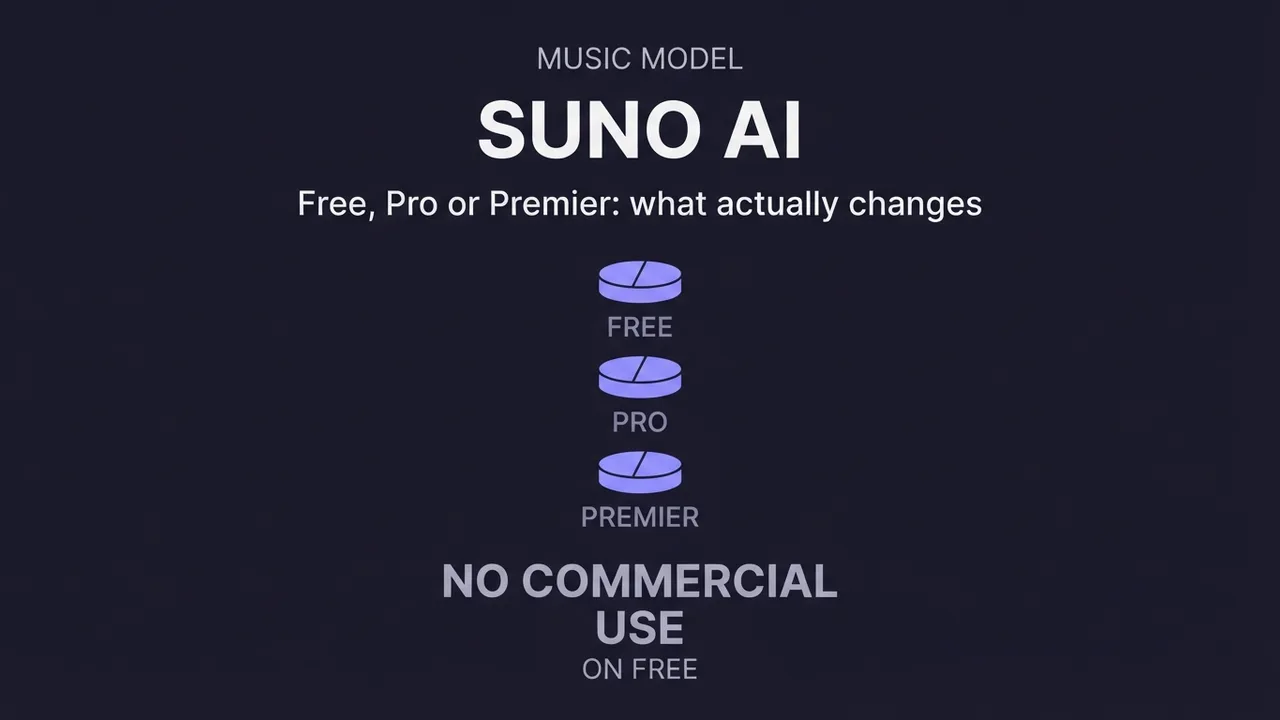
Suno doesn't price per second or per minute of music. It runs on credits: each song generation spends a fixed number of credits, and each paid tier hands you a monthly pool of them. So the real cost question isn't a rate, it's "how many songs a month do I need, and do I need to use them commercially."
This guide breaks down how Suno's credits work, what the free tier does and doesn't allow (the commercial-use catch is the thing most people miss), what a single song works out to on each paid tier, and how to choose. Suno adjusts its plans periodically, so treat the specific numbers as the current structure and ballpark rather than a permanent price list.
The short answer
Suno is free to start: daily credits let you generate a handful of full songs a day, but only for personal, non-commercial use, and Suno owns those tracks. To own your songs and use them commercially, you need a paid subscription.
Paid plans are monthly and credit-based. The Pro tier is the standard creator plan (a monthly credit allowance plus commercial rights); the Premier tier is the high-volume plan with a much larger allowance. Each song generation costs a fixed number of credits and returns two variations, so the practical cost of a track is "credits per generation ÷ how many generations it took to get a keeper."
Suno tiers at a glance
The structure that matters more than the exact numbers: what each tier gives you, and the commercial-rights line that separates free from paid.
- Free (Basic)
- Daily refreshing credits for a handful of songs/day · standard priority · personal, non-commercial use only · Suno retains ownership
- Pro
- Monthly credit allowance (hundreds of songs/month range) · commercial-use license · you own your tracks · faster/priority generation · downloads
- Premier
- Much larger monthly credit allowance (high-volume creators) · same commercial rights and ownership as Pro
- How credits spend
- A fixed credit cost per generation; one generation returns two song variations
- The key line
- Commercial rights and ownership start at Pro. No paid plan = no commercial use, however many credits you have
The free tier's real catch: it's licensing, not credits
The daily free credits are usable, you can make complete songs and learn the tool without paying. The limit that bites is the license: free-tier songs are for personal, non-commercial use only, and Suno keeps ownership of them.
That means no monetized YouTube uploads, no ads, no selling the track, no using it in client or commercial work, on anything you generated for free. This is the single most common Suno mistake: people build a project on the free tier, then find out at the finish line they can't legally use the song. If the track is going anywhere public-facing or paid, you need a paid plan before you rely on it.
What a single song costs
Because pricing is credits-per-generation, the per-song cost is just the monthly subscription price divided by how many keeper songs you get out of it. If a plan gives you enough credits for, say, a few hundred generations a month and you keep one song out of every three or four you generate, the effective cost per finished, usable, owned song lands in the low tens of cents, far cheaper than commissioning music, and the commercial license is included.
The number people forget is the iteration count. You rarely keep the first generation; you regenerate to get the vocal, the hook, or the mix right. Budget credits for three to five generations per keeper, not one. That iteration multiplier, not the sticker price, is what determines how many finished songs a tier gets you.
AI pricing moves fast. Stay current.
One email when model prices change or a new cost breakdown goes live. Real numbers only. No spam, unsubscribe anytime.
3 steps
How to pick the right Suno tier
Three questions settle it. The commercial-use line is the first and most important.
- 1
Step 1 of 3
Do you need to use the song commercially?
If yes, in any way (monetized upload, ad, client work, anything you make money from or publish publicly) you need a paid plan, full stop.
The free tier cannot be used commercially regardless of how many credits it gives you. If it's purely for personal fun, the free tier is fine.
- 2
Step 2 of 3
Estimate your monthly keeper count
Decide roughly how many finished songs you need per month, then multiply by your realistic iteration count (3-5 generations per keeper).
That gives your true monthly generation need, which is what a tier's credit allowance has to cover.
- 3
Step 3 of 3
Match the allowance to the need
The Pro tier covers most individual creators comfortably.
Step up to Premier only if your generation math exceeds Pro's allowance, high-volume, always-generating workflows. Starting on Pro and upgrading if you run out of credits is cheaper than over-buying Premier on day one.
Frequently asked questions
- Is Suno AI free?
- Suno has a real free tier: daily refreshing credits that let you generate a handful of full songs per day. But free-tier songs are for personal, non-commercial use only and Suno retains ownership of them. Commercial rights and ownership come only with a paid Pro or Premier subscription.
- How much does Suno cost per month?
- Suno's paid plans are monthly subscriptions: the Pro tier is the standard creator plan (a monthly credit allowance plus commercial rights and ownership), and the Premier tier is the high-volume plan with a much larger allowance. Both are credit-based; Suno adjusts the exact prices and credit amounts periodically, so check suno.com for current figures.
- How much does one Suno song cost?
- There's no per-song sticker price, it's your monthly plan cost divided by how many keeper songs you get. Each generation spends a fixed number of credits and returns two variations. Factoring in a realistic 3-5 generations per keeper, the effective cost of a finished, owned song on a paid plan typically lands in the low tens of cents, with the commercial license included.
- Can I sell or monetize songs made with Suno?
- Only on a paid plan. Songs generated on the free tier cannot be sold, monetized, or used commercially, and Suno owns them. A paid Pro or Premier subscription grants the commercial-use license and ownership of your tracks. Separately, confirm the platform you publish on allows monetized AI-generated music.
- Is Suno or Udio cheaper?
- Both use credit-based monthly subscriptions with a similar structure (free tier is non-commercial; paid tiers add commercial rights and credits), so headline prices are broadly comparable and shift as each company updates plans. The better value depends on your keeper rate on each: whichever model gets you a usable song in fewer generations is effectively cheaper for you, which is worth testing on the free tiers first.
Keep reading
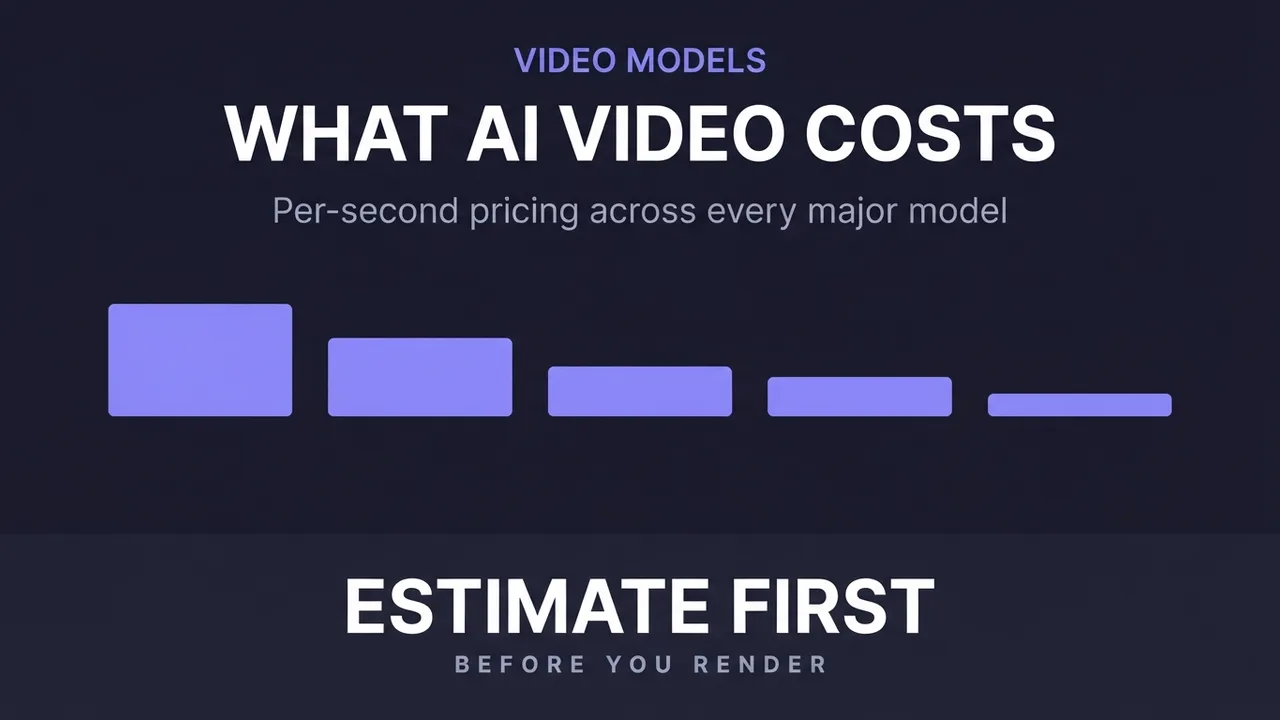
How much does AI video generation cost?
A clear breakdown of what AI video costs: per-second pricing, why resolution and audio change the bill, how to estimate a clip before you generate it, the free local alternative, and where the hidden costs like upscaling hide.
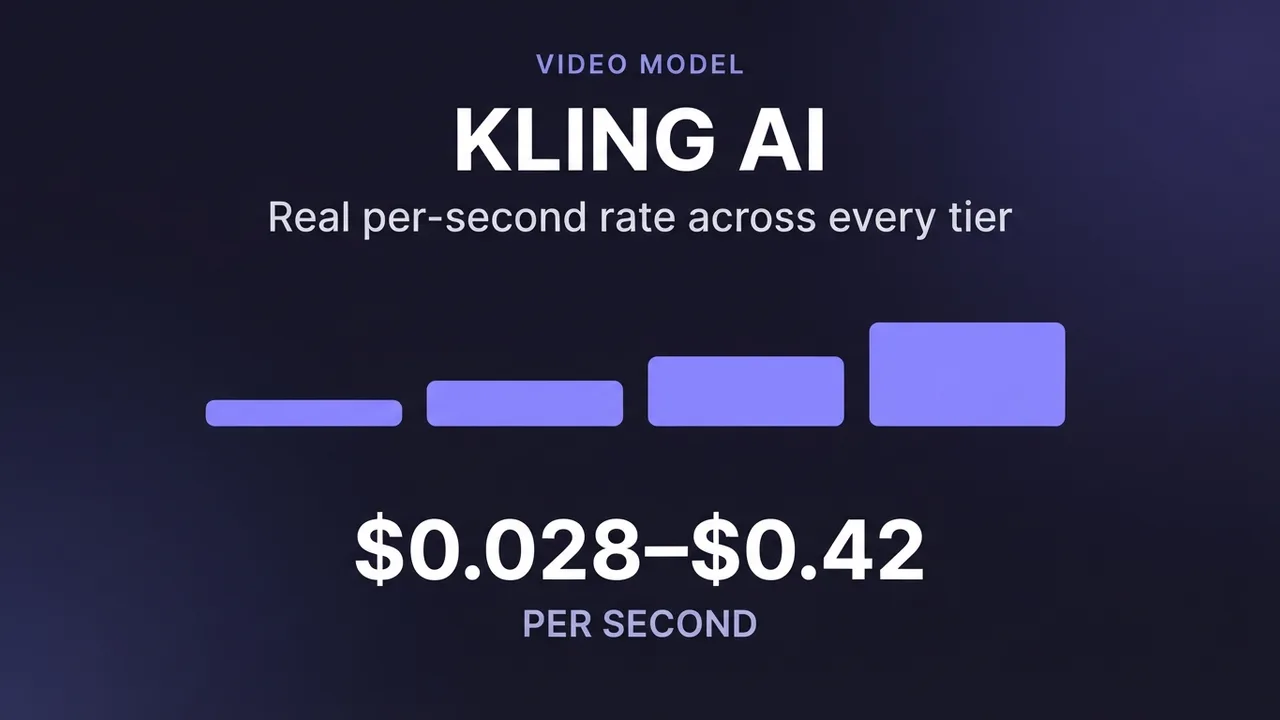
How much does Kling AI cost?
What Kling AI costs: the real per-second API rates from Kling's own pricing across every model (3.0, O1, 2.6, Master, 1.0 and more), how 720p, 1080p and 4K differ, what native audio adds, image pricing, and how to estimate a clip.
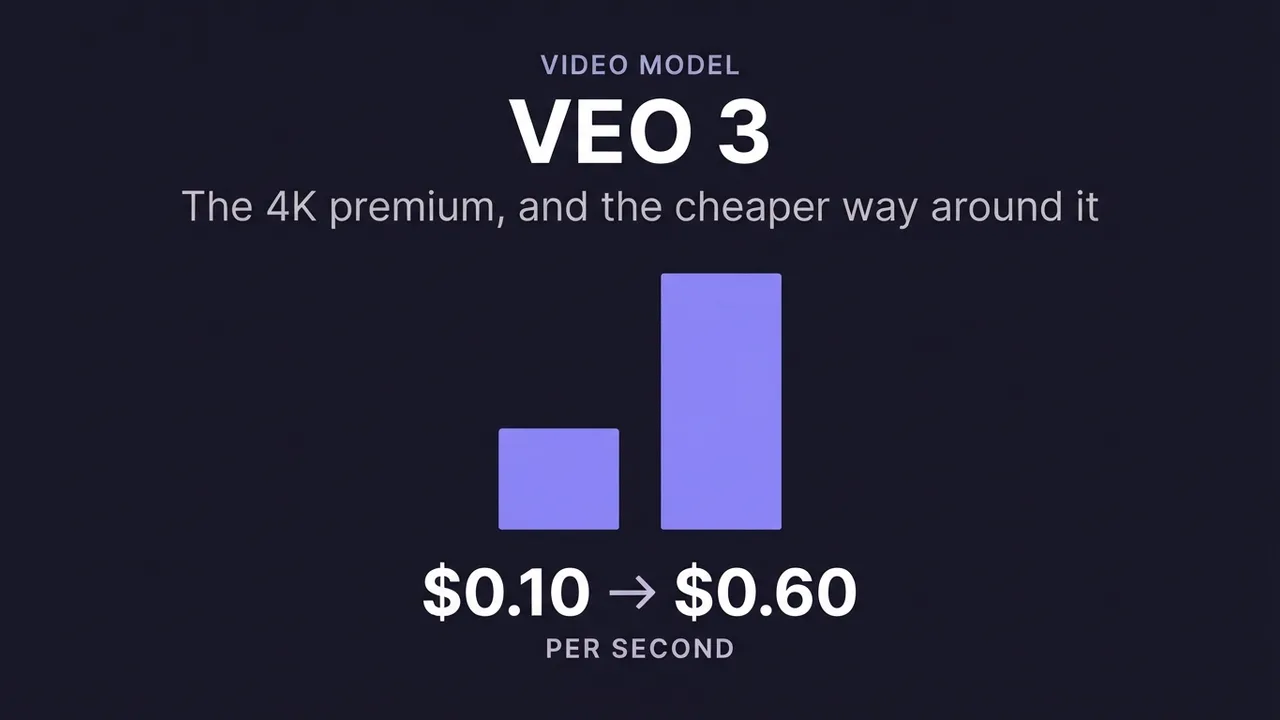
How much does Veo 3 cost?
Google Veo 3 pricing explained with the real per-second API rates: standard vs fast vs lite, what the 4K premium costs, why audio is included in the price, and how the tiers compare for budgeting a clip.
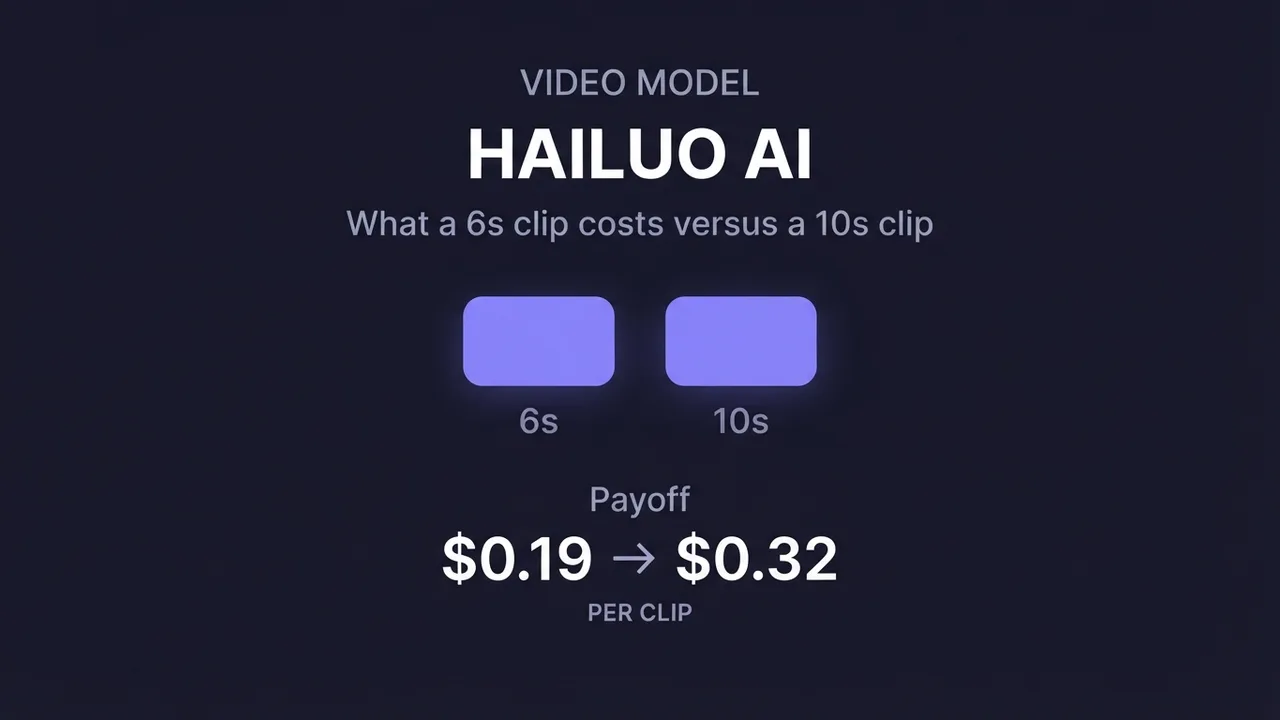
How much does Hailuo AI cost?
Hailuo AI (MiniMax) pricing with the real per-generation API rates: what a 6-second vs 10-second clip costs, how 768p and 1080p differ, the fast vs standard model tiers, and how to budget a batch.
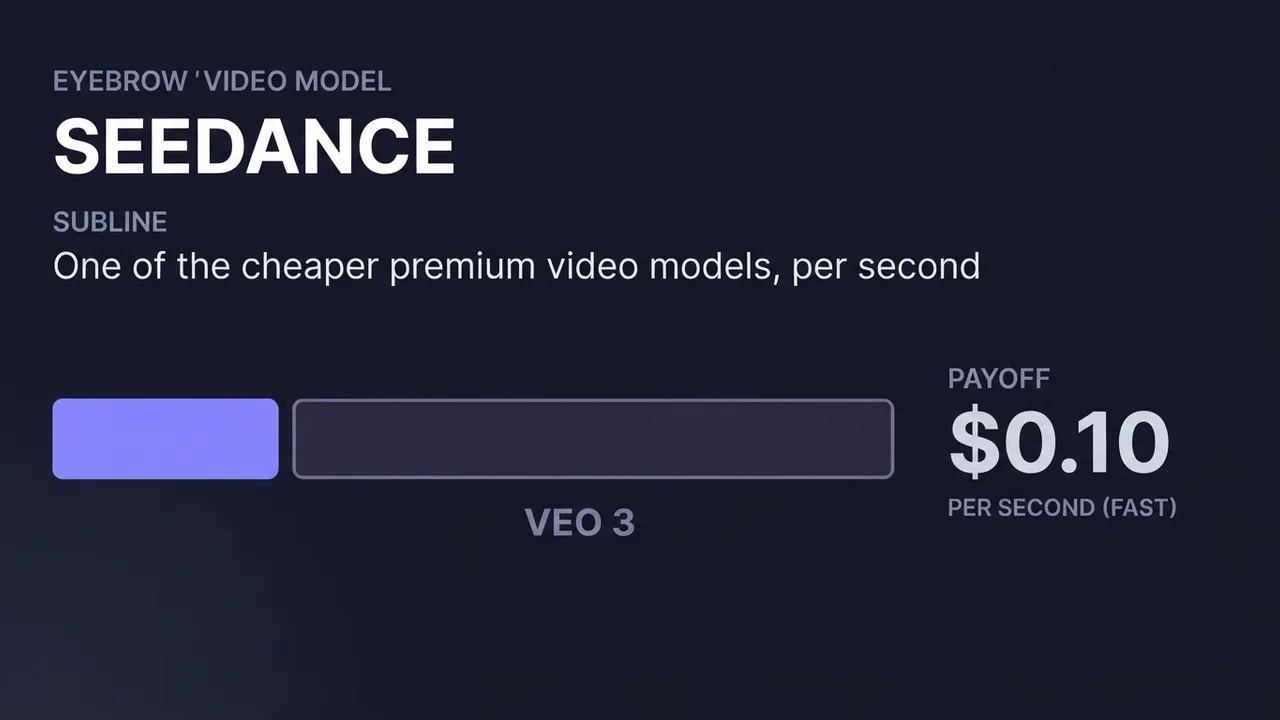
How much does Seedance cost?
Seedance (ByteDance) pricing: the real per-second API rate for the fast tier, how standard, fast and mini differ, why it's one of the cheaper premium video models, and how to estimate a clip.
Related models
AI pricing moves fast. Stay current.
One email when model prices change or a new cost breakdown goes live. Real numbers only. No spam, unsubscribe anytime.