
Which AI APIs allow uncensored roleplay
Written by Clement
This question gets asked in roleplay communities every few weeks, and it never gets a settled answer. The most recent round we watched drew over a hundred replies, and the top-voted one was a shrug: someone naming a provider they thought probably did not care much. That is the actual state of public knowledge on this.
There is a reason it stays unsettled, and it is worth understanding before you pick a provider. This page covers what refusal behavior is, why recommendations decay so fast, and how to test a model yourself in about twenty minutes, which is the only answer that stays true.
Why nobody can just give you the answer
Three separate things get called censorship, and confusing them is why threads on this go in circles. The first is the model's own training: a model tuned to refuse will refuse, and no amount of prompting reliably removes behavior baked into the weights. The second is a moderation layer sitting in front of the model, screening your input and its output independently. The third is the provider's terms of service, which is a legal position rather than a technical one and can change without the model changing at all.
A provider can be permissive on all three, or permissive on two and strict on the third, and your experience will differ completely depending on which combination you hit. Someone reporting that a model handled their scene fine may be running through a different endpoint, on a different tier, in a different country, than you are.
That is also why the answer decays. A provider's moderation layer can tighten on a Tuesday with no announcement and no model version change. A recommendation from six weeks ago is not evidence about today, and a recommendation from a year ago is close to worthless.
Hard refusal, soft deflection, and the difference that matters
When a model declines, it does it in one of two ways, and the difference decides how a long roleplay session goes. A hard refusal is explicit: you get a message saying it will not do this, or an API error. It is annoying, but it is honest, and you know immediately where the line is.
A soft deflection is different: the model does not refuse. It steers. The scene drifts toward something safer, characters change the subject, a kinky moment resolves into a bland answer. Nothing announces itself as a refusal, so you keep prompting into it, and the session degrades without you being able to point at the moment it broke.
For anything longer than a few exchanges, soft deflection is the more important property to test for. A model with a clear hard line you can work around often beats a model that never refuses but quietly sands the edges off everything.
What to check before committing to a provider
The properties that decide whether a model is workable for this, beyond whether it says no.
| Refusal style | Hard refusal or soft deflection. Test with a scene that escalates gradually, not a single blunt request |
|---|---|
| Consistency across a long session | Some models tighten as context fills. A model fine at message 5 and evasive at message 80 is a different product. We confirmed Mistral Small and Llama 3 hold past a hundred messages; unconfirmed for the others |
| System-prompt adherence | Whether a persona instruction survives, or gets overridden by the model's defaults after a few turns |
| Moderation layer | Whether the provider screens separately from the model. Look for a moderation endpoint or a content policy distinct from the model card |
| Terms of service | What the provider's terms actually permit. Technically working is not the same as allowed, and accounts do get closed |
| Context window | Long roleplay eats context fast. A permissive model with a small window may be worse in practice than a stricter one with room |
| Cost per session | Price per token matters less than tokens per session. Long context re-sent every turn is where the bill comes from |
Test it yourself in twenty minutes
This is the part that stays true regardless of which provider is currently permissive. Run it before you build anything on top of a model.
- 1
Write one fixed prompt set
Three or four scenes, written once, reused across every provider you test. Varying the prompt per provider is the most common mistake and it makes the results meaningless. Include at least one scene that escalates gradually rather than opening at full intensity.
- 2
Run each scene cold
Fresh session, no history, same system prompt every time. Record the exact response, not your impression of it. Note whether a decline was a hard refusal or a soft deflection.
- 3
Then run one long session
Take the scene that worked and push it to eighty or a hundred messages. This is where models diverge most, and it is the test almost nobody runs before choosing. Watch for the tone tightening as context fills.
- 4
Check the terms, not just the behavior
Read what the provider's terms of service actually permit. A model that technically complies today under terms that forbid it is an account closure waiting to happen, and you will lose your history with it.
- 5
Re-test before you rely on it
Re-run the same set every couple of months, and whenever behavior changes noticeably. Because your prompt set is fixed, a re-run takes minutes and tells you immediately whether something moved.
Get new guides by email
One email when we publish new guides and model breakdowns. No spam, unsubscribe anytime.
Where things stand on our own testing
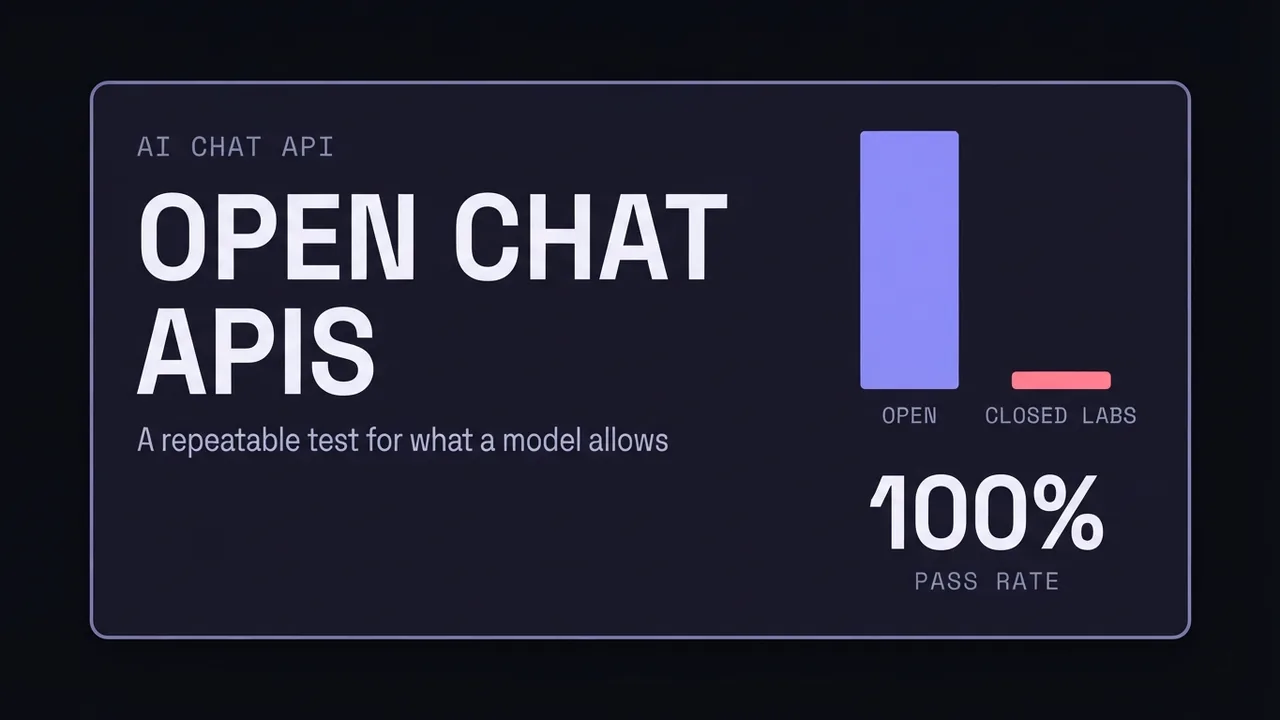
We ran a fixed set of hardcore NSFW prompts across several hosted models rather than repeating what circulates in forum threads. Mistral Small held up on all of them, a clean 100%. DeepSeek came in around 70%, workable but with real gaps. Gemini and the rest of the mainstream closed-lab models sat close to 0%, refusing almost everything in the set. Llama 3 also scored 100% with roleplay that stayed in character and accurate to the prompt, though as a base model it is aging against what else is available now.
Alibaba's Qwen line was the interesting middle case: it struggles to stay in NSFW territory unless you are running an uncensored or abliterated variant, which for that family means self-hosting rather than a hosted API. If you specifically want Qwen's quality, the local route in our companion setup guide is the practical path, not a hosted endpoint.
On price per million tokens: Mistral Small runs $0.15 input / $0.60 output. DeepSeek V4 Flash runs $0.22 input / $0.66 output, close enough that the pass-rate gap is what actually decides between them, not the price.
We also pushed past the cold-open test into the long session this page recommends. Mistral Small and Llama 3 both held up past a hundred messages: no tightening, no drift toward refusal as context filled. That is the property most recommendations never check, and it is where these two actually earned the top spot rather than just winning on the opening prompt.
The local alternative
If the reason you want an uncensored API is that you do not want a provider deciding what your conversation can contain, running a model on your own machine removes the question entirely. There is no moderation layer, no terms of service governing your chats, and nothing leaves your computer.
The trade is model size. What you can run locally is smaller than what you can rent, and in long conversations that shows up as thinner memory and flatter replies. Our walkthrough on setting up a local uncensored companion covers the CPU-only path, which needs no GPU at all.
For many people the honest answer is both: local for anything private, a hosted API when you want a bigger model and accept the trade.
Frequently asked questions
- Which AI API is the most uncensored?
- In our own fixed-prompt-set testing: Mistral Small passed a hardcore NSFW prompt set at 100%, Llama 3 also scored 100% with accurate in-character roleplay, DeepSeek came in around 70%, and mainstream closed-lab models like Gemini sat close to 0%. Mistral Small and Llama 3 also held that behavior past a hundred messages in a real long session, with no tightening as context filled, which is the test most recommendations skip. That is a snapshot, not a permanent ranking. Refusal behavior is set by three independent things (the model's training, a moderation layer in front of it, and the provider's terms) and any of them can change without notice, so re-run the twenty-minute test below before committing to a provider long-term.
- What is the difference between a hard refusal and a soft deflection?
- A hard refusal is explicit: the model says it will not do this, or the API returns an error. A soft deflection is the model steering the scene somewhere safer without announcing it, so an intense moment quietly resolves into something tamer. Soft deflection is worse for long roleplay because nothing marks the point where it started, and it is the behavior most people fail to test for.
- Is running a model locally better than using an uncensored API?
- Better for privacy and cost, worse for capability. Local means no moderation layer, no terms governing your conversations, and nothing leaving your machine, but the models small enough to run at home are weaker than the ones you can rent, and that shows up as thinner memory in long sessions. Pick local when privacy is the point, and a hosted API when you need the larger model.
- Can my account be banned for uncensored roleplay?
- Yes. A model producing something and a provider permitting it are separate questions, and terms of service are the one that governs your account. Read what the provider actually allows rather than inferring permission from the fact that a generation succeeded, and keep anything you would not want to lose backed up outside their system.
- Is Qwen good for uncensored roleplay?
- Not through a hosted API. In our testing, Alibaba's Qwen line struggles to stay in NSFW territory unless you are running an uncensored or abliterated variant, and hosted endpoints don't offer that. If you specifically want Qwen's quality for this, self-hosting an abliterated build is the only path we found that works, which is a different setup than anything on this page. Our companion setup guide covers the local route.
Keep reading
How to Set Up a Free, Uncensored AI Companion Locally (No GPU)
Install Ollama, pull an uncensored abliterated Qwen3.5 4B model, and chat with your own private AI companion, fully offline on CPU only. No GPU, no account, no subscription.
How to Set Up a Local NSFW Image Model: Full Tutorial
Install an adult image-generation workflow on a rented cloud GPU: RunPod, ComfyUI, a real workflow file, and every step in between, screenshot by screenshot.
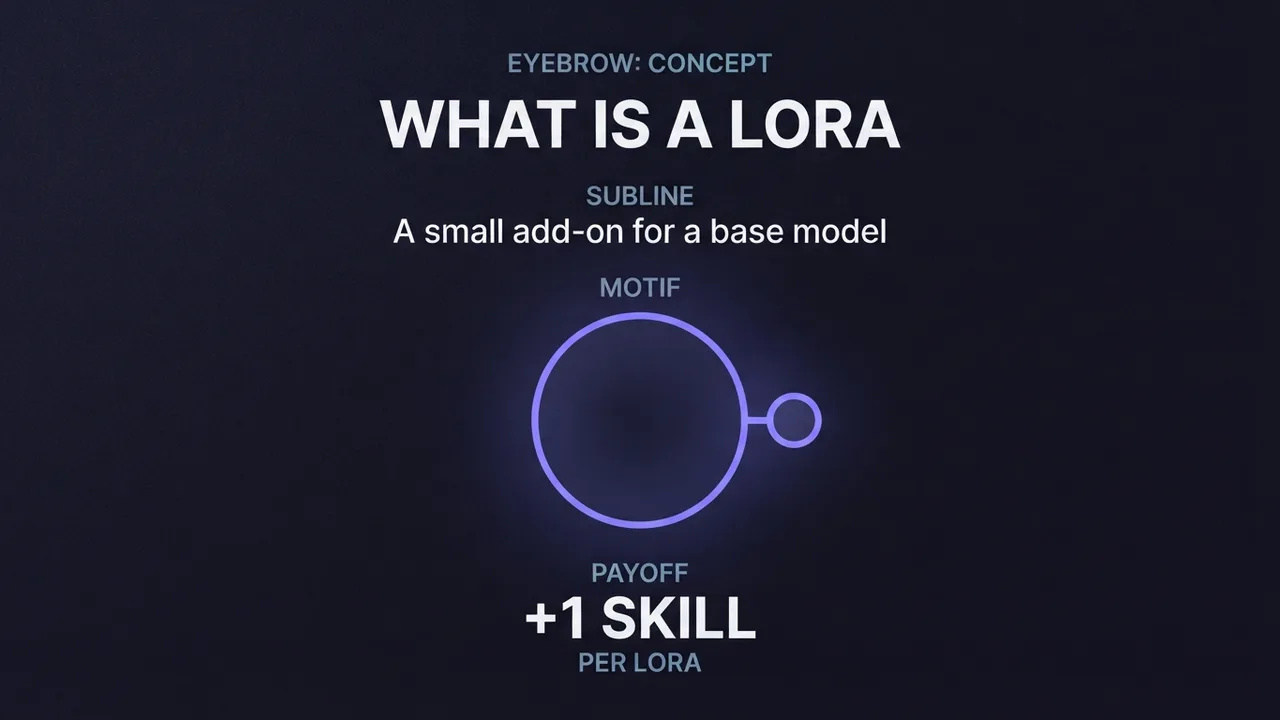
What is a LoRA and when do you need one
A plain-language explanation of LoRAs for AI image generation: what they add to a base model, why they only work on open-weight models, and what weight to load one at.
Get new guides by email
One email when we publish new guides and model breakdowns. No spam, unsubscribe anytime.